
Hand Luggage Guide – everything you need to know before your trip
Hand luggage rules sound simple – but they certainly aren’t anymore. More and more airlines are structuring their fares in such a way that even a small cabin bag isn’t included in the cheapest ticket. If you overlook this, you’ll end up paying significantly more at the gate than you would have done when booking. This guide shows you which hand luggage dimensions airlines accept, what you’re allowed to pack in your hand luggage, and how to pack it so that nothing goes wrong.
Key information about hand luggage at a glance:
- Standard dimensions for hand luggage: 55 x 40 x 20 cm
- Maximum weight: 8 to 10 kilograms
- Liquids in hand luggage: containers must not exceed 100 ml in total and must all be placed together in a transparent, resealable 1-litre bag
- On the Economy Basic fare offered by many airlines, often only one personal item is permitted (max. 40 x 30 x 15 cm) – no trolley
- From Summer 2027 hand luggage will have to be included as standard in the airfare, according to an EU decision
Tip: Check your airline’s baggage allowance before every trip. It’s particularly worth taking a close look at budget fares – there are significant differences between providers.
Hand Luggage Guide – everything you need to know before your trip
Hand luggage rules sound simple – but they certainly aren’t anymore. More and more Airlines are structuring their fares in such a way that even a small cabin bag isn’t included in the cheapest ticket. If you overlook this, you’ll end up paying significantly more at the gate than you would have done when booking. This guide shows you which hand luggage dimensions Airlines accept, what you’re allowed to pack in your hand luggage, and how to pack it so that nothing goes wrong.
Key information about hand luggage at a glance:
- Standard dimensions for hand luggage: 55 x 40 x 20 cm
- Maximum weight: 8 to 10 kilograms
- Liquids in hand luggage: containers must not exceed 100 ml, all together in one transparent, resealable 1-litre bag
- On the Economy Basic fare offered by many Airlines, often only one personal item is permitted (max. 40 x 30 x 15 cm) – no Trolley
- From Summer 2027 hand luggage will have to be included as standard in the airfare, according to an EU decision
Tip: Check your airline’s baggage allowance before every trip. It’s particularly worth taking a close look at budget fares – there are significant differences between providers.
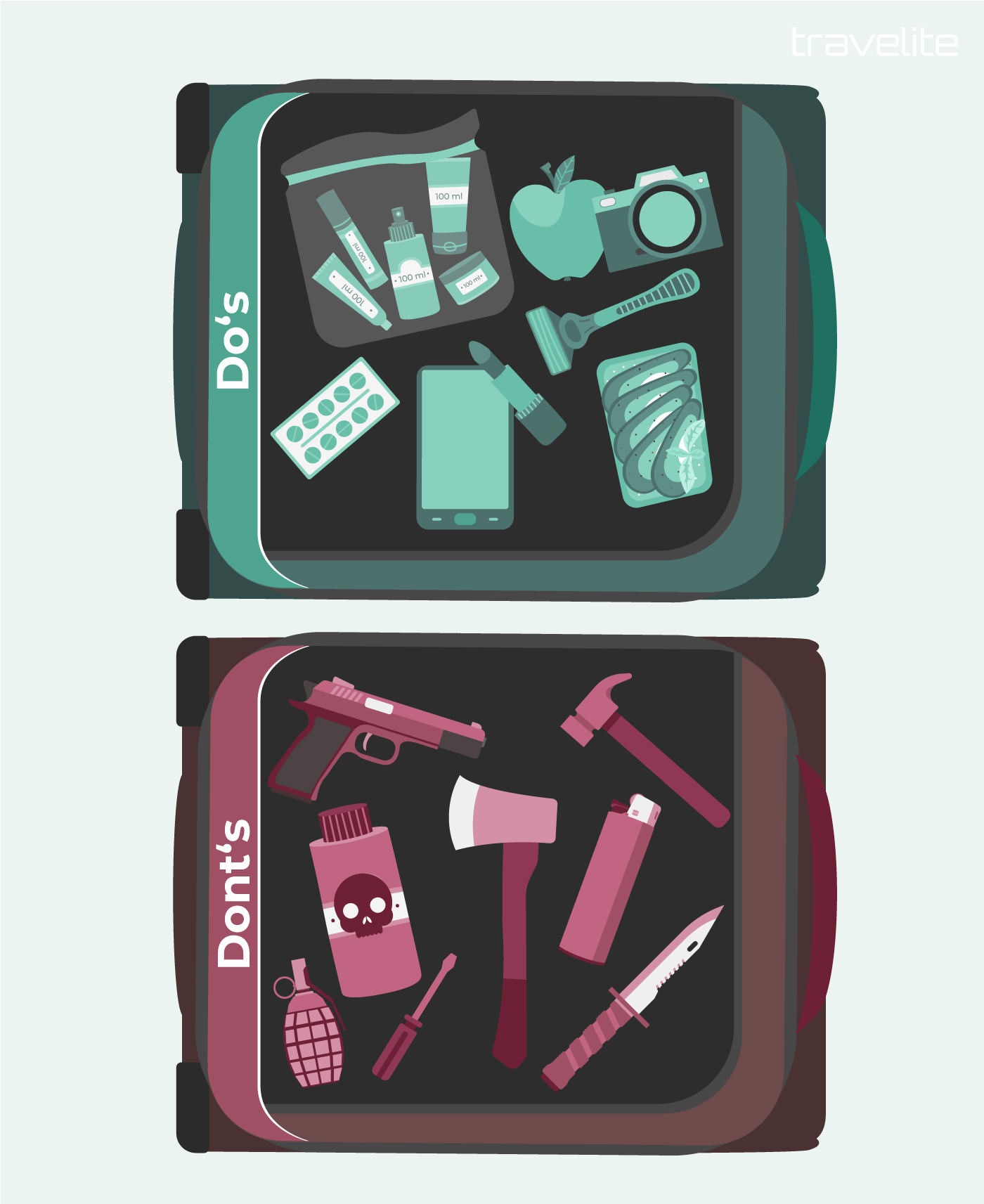
What can you take in your hand luggage?
Not everything that is permitted in checked-in luggage is also allowed in the cabin. The key factors are the EU’s security regulations and the individual rules of the respective airline. If you are familiar with them, you can avoid delays at security and save time when boarding.
|
Permitted in hand luggage: |
Not permitted in hand luggage: |
|
|
What can you take in your hand luggage?
Not everything that is permitted in checked-in luggage is also allowed in the cabin. The key factors are the EU’s security regulations and the individual rules of the respective airline. If you are familiar with them, you can avoid delays at security and save time when boarding.
|
Permitted in hand luggage: |
Not permitted in hand luggage: |
|
|
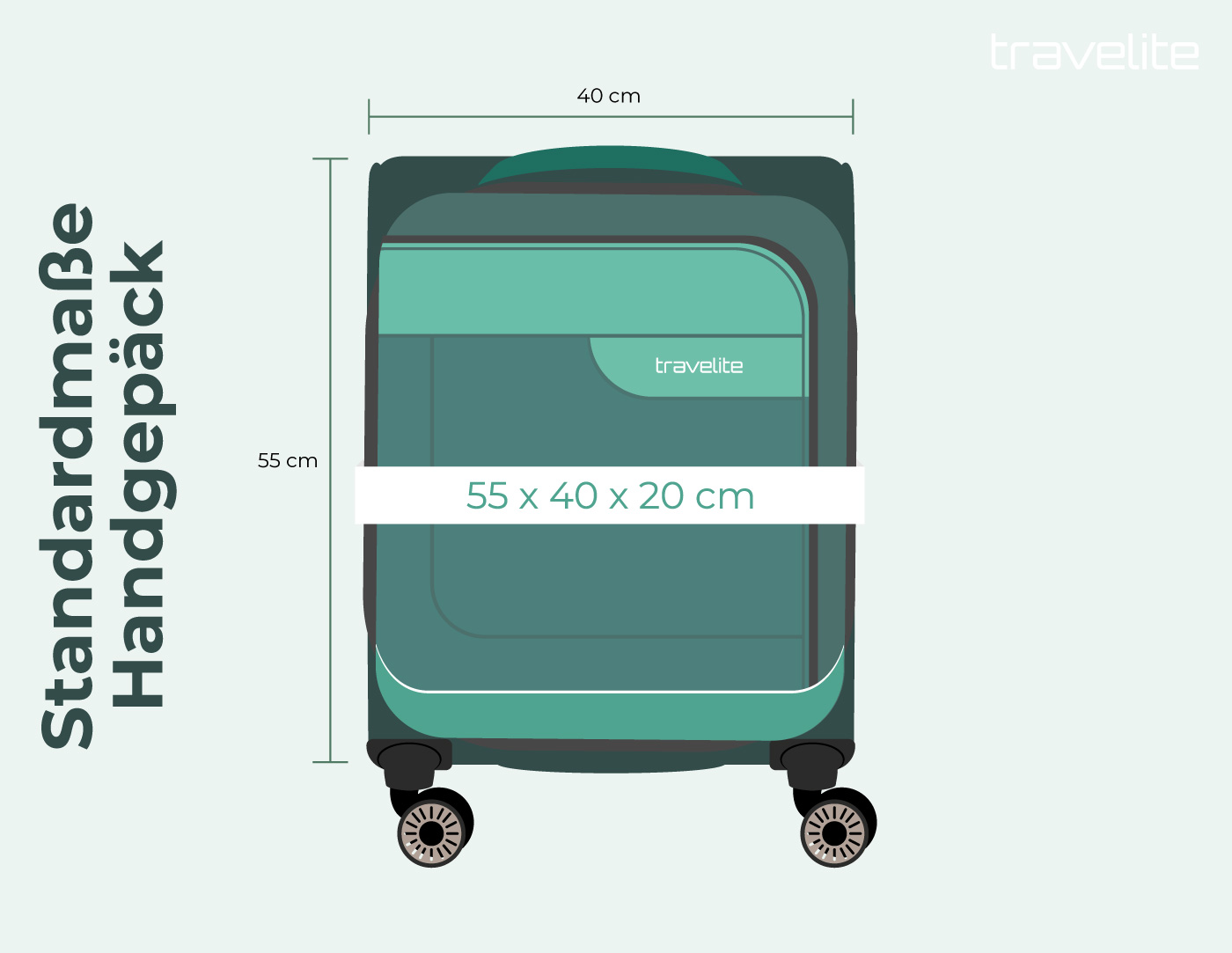
An overview of the luggage sizes for the large Airlines
| Airlines | Maximum weight | Maximum size |
|---|---|---|
| Lufthansa | 8kg | 55 x 40 x 23 cm |
| Ryanair | 10kg* | 55 x 40 x 20 cm |
| TUI | 6kg | 55 x 40 x 20 cm |
| Condor | 8kg* | 55 x 40 x 20 cm |
| Eurowings | 8kg* | 55 x 40 x 23 cm |
| Eurowings Basic fare | - | 40 x 30 x 25 cm |
| KLM | 12kg | 55 x 35 x 25 cm |
| AEGAN | 8kg | 26 x 45 x 25 cm |
| Air Belgium | 10kg | 55 x 40 x 20 cm |
| AIR CANADA | - | 55 x 40 x 23 cm |
| Air China | 5kg | 55 x 40 x 20 cm |
| Air France | 12kg | 55 x 35 x 25 cm |
| Air India | 7kg | 55 x 40 x 20 cm |
| AIR NEW ZEALAND | 7kg | max. 118 cm |
| ANA | 10kg | 55 x 40 x 25 cm |
| Asiana Airlines | 10kg | 55 x 40 x 20 cm |
| Austrian | 8kg | 55 x 40 x 23 cm |
| British Airways | 23kg | 56 x 40 x 25 cm |
| Brussels Airlines | 8kg | 55 x 40 x 23 cm |
| Croatia Airlines | 8kg | 55 x 40 x 20 cm |
| easyJet | 10kg* | 45 x 36 x 20 cm |
| Egypt Air | 8kg | 58 x 40 x 25 cm |
| Ethiopian Airlines | 7kg | 55 x 40 x 23 cm |
| FINNAIR | 8kg | 55 x 40 x 23 cm |
| Iberia | 10kg | 56 x 40 x 25 cm |
| LOT Polish Airlines | 8kg | 55 x 40 x 23 cm |
| Norwegian | 10kg | 55 x 40 x 23 cm |
| SAS | 8kg | 55 x 40 x 23 cm |
| SINGAPORE Airlines | 7kg | max. 115 cm |
| TAP Air Portugal | 10kg | 55 x 40 x 25 cm |
| SWISS | 10kg | 55 x 40 x 23 cm |
| THAI | 7kg | 56 x 45 x 25 cm |
| Turkish Airlines | 8kg | 55 x 40 x 23 cm |
| Vueling | 10kg | 55 x 40 x 20 cm |
| WIZZ | 10kg | 55 x 40 x 23 cm |
*There may be variations due to additional options etc.; please check directly with your Airline.
An overview of the luggage sizes for the large Airlines
| Airlines | Maximum weight | Maximum size |
|---|---|---|
| Lufthansa | 8kg | 55 x 40 x 23 cm |
| Ryanair | 10kg* | 55 x 40 x 20 cm |
| TUI | 6kg | 55 x 40 x 20 cm |
| Eurowings | 8kg* | 55 x 40 x 23 cm |
| Condor | 8kg* | 55 x 40 x 20 cm |
| AEGAN | 8kg | 26 x 45 x 25 cm |
| Air Belgium | 10kg | 55 x 40 x 20 cm |
| AIR CANADA | - | 55 x 40 x 23 cm |
| Air China | 5kg | 55 x 40 x 20 cm |
| Air France | 12kg | 55 x 35 x 25 cm |
| Air India | 7kg | 55 x 40 x 20 cm |
| AIR NEW ZEALAND | 7kg | max. 118 cm |
| ANA | 10kg | 55 x 40 x 25 cm |
| Asiana Airlines | 10kg | 55 x 40 x 20 cm |
| Austrian | 8kg | 55 x 40 x 23 cm |
| British Airways | 23kg | 56 x 40 x 25 cm |
| Brussels Airlines | 8kg | 55 x 40 x 23 cm |
| Croatia Airlines | 8kg | 55 x 40 x 20 cm |
| easyJet | 10kg* | 45 x 36 x 20 cm |
| Egypt Air | 8kg | 58 x 40 x 25 cm |
| Ethiopian Airlines | 7kg | 55 x 40 x 23 cm |
| FINNAIR | 8kg | 55 x 40 x 23 cm |
| Iberia | 10kg | 56 x 40 x 25 cm |
| LOT Polish Airlines | 8kg | 55 x 40 x 23 cm |
| Norwegian | 10kg | 55 x 40 x 23 cm |
| SAS | 8kg | 55 x 40 x 23 cm |
| SINGAPORE Airlines | 7kg | max. 115 cm |
| TAP Air Portugal | 10kg | 55 x 40 x 25 cm |
| SWISS | 10kg | 55 x 40 x 23 cm |
| THAI | 7kg | 56 x 45 x 25 cm |
| Turkish Airlines | 8kg | 55 x 40 x 23 cm |
| vualing | 10kg | 55 x 40 x 20 cm |
| WIZZ | 10kg | 55 x 40 x 23 cm |
*There may be variations due to additional options etc.; please check directly with your Airline.
Important for connecting flights: If you are flying with multiple Airlines, the hand luggage rules of the respective operating Airline apply to each leg of the journey – not those of the Airline through which the booking was made. For a Vienna–Munich–Johannesburg connection, for example, the first flight is subject to Lufthansa’s rules, whilst the second is subject to those of South African Airways. If in doubt, follow the most restrictive rules of the airlines involved Airlines.
Check your hand luggage dimensions: Will your suitcase fit in the cabin?
Whether your suitcase qualifies as hand luggage comes down to a matter of a few centimetres – and, with many Airlines, also depends on the fare. Simply enter the height, width and depth (and optionally the weight). The checker shows you, for each airline, whether the dimensions are within the limits, whether the weight is correct, and whether the large Trolley is included in the cheapest fare or requires an UPGRADE. This way, you’ll know before booking where you can actually fly with hand luggage at no extra cost.
Why the fare is more important than the airline
The airline alone says little about what you’re actually allowed to take in your hand luggage. The fare you’ve booked is the deciding factor. Particularly among European airlines, a model has become established in recent years whereby the cheapest fare often includes only one small personal item – no large piece of hand luggage, no access to the overhead lockers.
|
Airline |
Fare |
What’s included? |
|
Lufthansa |
Economy Basic |
Personal item only (40 x 30 x 15 cm) |
|
Lufthansa |
Economy Light and above |
Personal item + 1 piece of hand luggage (8 kg) |
|
Eurowings |
Basic |
Small bag only (40 x 30 x 25 cm) |
|
Eurowings |
Smart / BIZclass |
1–2 items of hand luggage (8 kg) |
|
Ryanair |
Standard (no priority) |
Small bag only (40 x 20 x 25 cm) |
|
Ryanair |
Priority or higher |
Small ‘ Trolley ’ + small bag |
|
Condor |
cheapest tariff |
Hand luggage included; luggage compartment subject to a charge |
Anyone who has to check in their Trolley at the gate because it is too large or not covered by their fare will pay significantly more than if they had booked it in advance. With Lufthansa, gate fees range from 60 to 110 euros – depending on the route and payable by credit card only. Similar rules apply with other airlines Airlines. Checked-in luggage booked in advance is cheaper in almost all cases.
How many items of luggage can I take as hand luggage?
Business The number of items of hand luggage you are allowed to take into the cabin depends on two factors: the class of travel booked and the fare. In Economy Class, one piece of hand luggage is usually permitted; in Business Class and First Class, two are often allowed. However, as described in the previous section, the cheapest fare on many Airlines flights no longer includes even this single piece.
Many Airlines allow a so-called ‘personal item’ in addition to your hand luggage – a small bag, laptop bag or rucksack that fits under the seat in front of you. This second item is included free of charge in many fares, even if the Trolley costs extra.
In addition, on most Airlines flights, passengers are permitted to take the following items into the cabin free of charge:
- Jacket or coat
- Umbrella
- Carrycot or infant carrier (per infant)
- Foldable pushchair (a so-called ‘pocket buggy’)
- Wheelchairs, walking frames and other mobility aids
- Small musical instruments (depending on the airline and size; subject to EU-wide regulations from 2027)
- Duty-free shopping from the security area
The exact regulations vary depending on the airline and fare. It’s worth checking the baggage allowance before you pack, especially for budget bookings.
Important for connecting flights: If you are flying with multiple Airlines, the hand luggage rules of the respective operating Airline apply to each leg of the journey – not those of the Airline through which the booking was made. For a Vienna–Munich–Johannesburg connection, for example, the first flight is subject to Lufthansa’s rules, whilst the second is subject to those of South African Airways. If in doubt, follow the most restrictive rules of the airlines involved Airlines.
Check your hand luggage dimensions: Will your suitcase fit in the cabin?
Whether your suitcase qualifies as hand luggage comes down to a matter of a few centimetres – and, with many Airlines, also depends on the fare. Simply enter the height, width and depth (and optionally the weight). The checker shows you, for each airline, whether the dimensions are within the limits, whether the weight is correct, and whether the large Trolley is included in the cheapest fare or requires an UPGRADE. This way, you’ll know before booking where you can actually fly with hand luggage at no extra cost.
Why the fare is more important than the airline
The airline alone says little about what you’re actually allowed to take in your hand luggage. The fare you’ve booked is the deciding factor. Particularly among European airlines, a model has become established in recent years whereby the cheapest fare often includes only one small personal item – no large piece of hand luggage, no access to the overhead lockers.
|
Airlines |
Rate |
What’s included? |
|
Lufthansa |
Economy Basic |
Personal item only (40 x 30 x 15 cm) |
|
Lufthansa |
Economy Light and above |
Personal item + 1 piece of hand luggage (8 kg) |
|
Eurowings |
Basic |
Small bag only (40 x 30 x 25 cm) |
|
Eurowings |
Smart / BIZclass |
1–2 items of hand luggage (8 kg) |
|
Ryanair |
Standard (no priority) |
Small bag only (40 x 20 x 25 cm) |
|
Ryanair |
Priority or higher |
Small ‘ Trolley ’ + small bag |
|
Condor |
cheapest tariff |
Hand luggage included; luggage compartment subject to a charge |
Anyone who has to check in their Trolley at the gate because it is too large or not covered by their fare will pay significantly more than if they had booked it in advance. With Lufthansa, gate fees range from 60 to 110 euros – depending on the route and payable by credit card only. Similar rules apply with other airlines Airlines. Checked-in luggage booked in advance is cheaper in almost all cases.
How many items of luggage can I take as hand luggage?
Business The number of items of hand luggage you are allowed to take into the cabin depends on two factors: the class of travel booked and the fare. In Economy Class, one piece of hand luggage is usually permitted; in Business Class and First Class, two are often allowed. As described in the previous section, however, the cheapest fare on many Airlines flights no longer includes even this single piece.
Many Airlines allow a so-called ‘personal item’ in addition to your hand luggage – a small bag, laptop bag or rucksack that fits under the seat in front of you. This second item is included free of charge in many fares, even if the Trolley costs extra.
In addition, on most Airlines flights, passengers are permitted to take the following items into the cabin free of charge:
- Jacket or coat
- Umbrella
- Carrycot or infant carrier (per toddler)
- Foldable pushchair (a so-called ‘pocket buggy’)
- Wheelchairs, walking frames and other mobility aids
- Small musical instruments (depending on the airline and size; subject to EU-wide regulations from 2027)
- Duty-free shopping from the security area
The exact regulations vary depending on the Airline and fare. It’s worth checking the baggage allowance before you pack, especially for budget bookings.
Packing your hand luggage properly – tips for travelling efficiently
Well-organised hand luggage not only saves space but also makes things easier at the airport. With the right technique for packing suitcases, you can fit a surprising amount into even small pieces of luggage without anything getting creased or becoming a jumble.
Tips for organising your hand luggage efficiently:
- Store heavy items at the bottom (to prevent anything from getting damaged)
- Keep important documents such as travel documents and medication to hand
- Place any items that may need to be shown to customs officers during security checks (e.g. liquids) at the top of the zip or in the front pocket
- Roll clothes up tightly instead of folding them (this saves space and prevents creases)
- Take an extra piece of luggage for free (such as a handbag)
- Place small items in separate bags (e.g. jewellery)
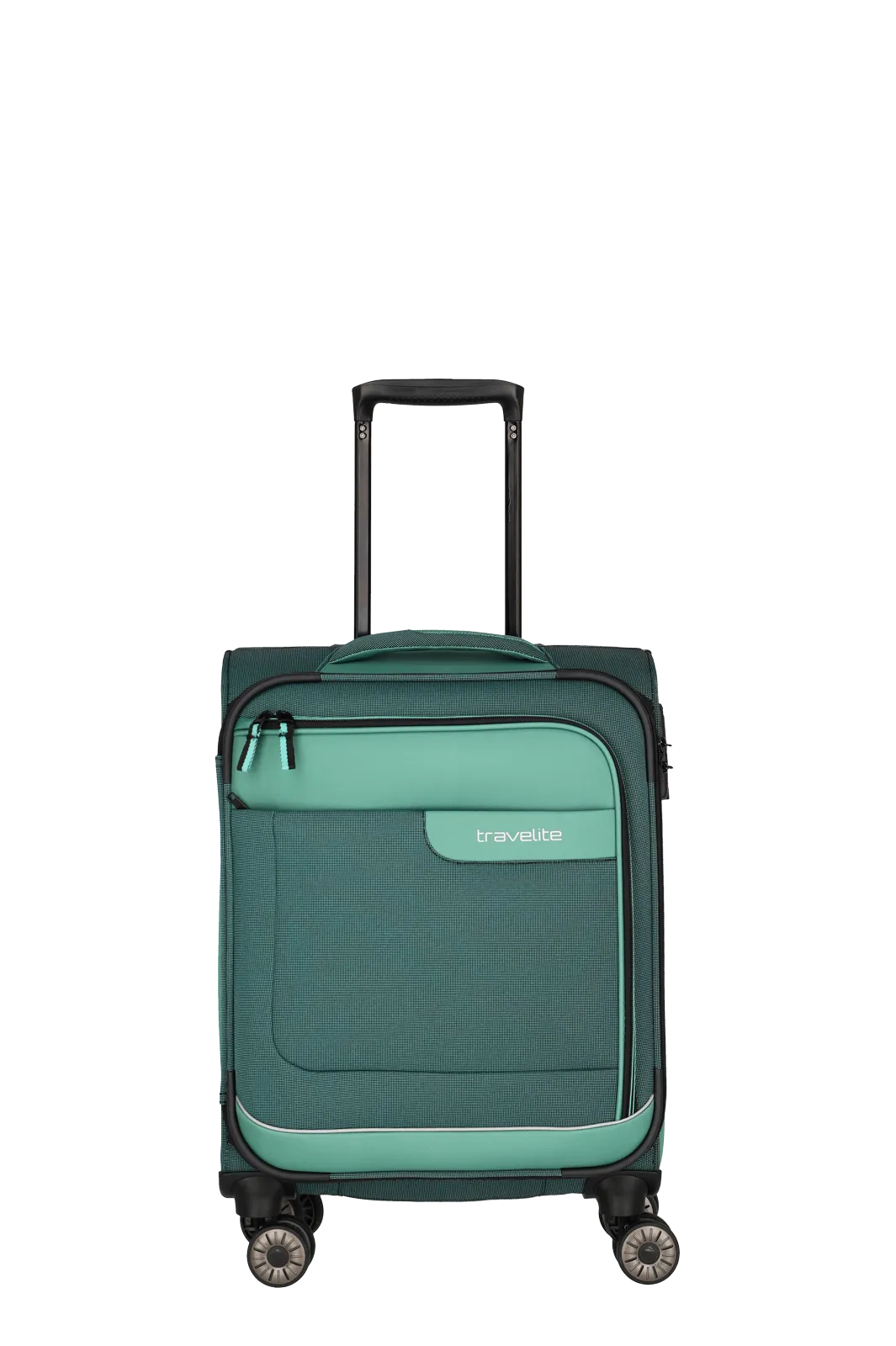
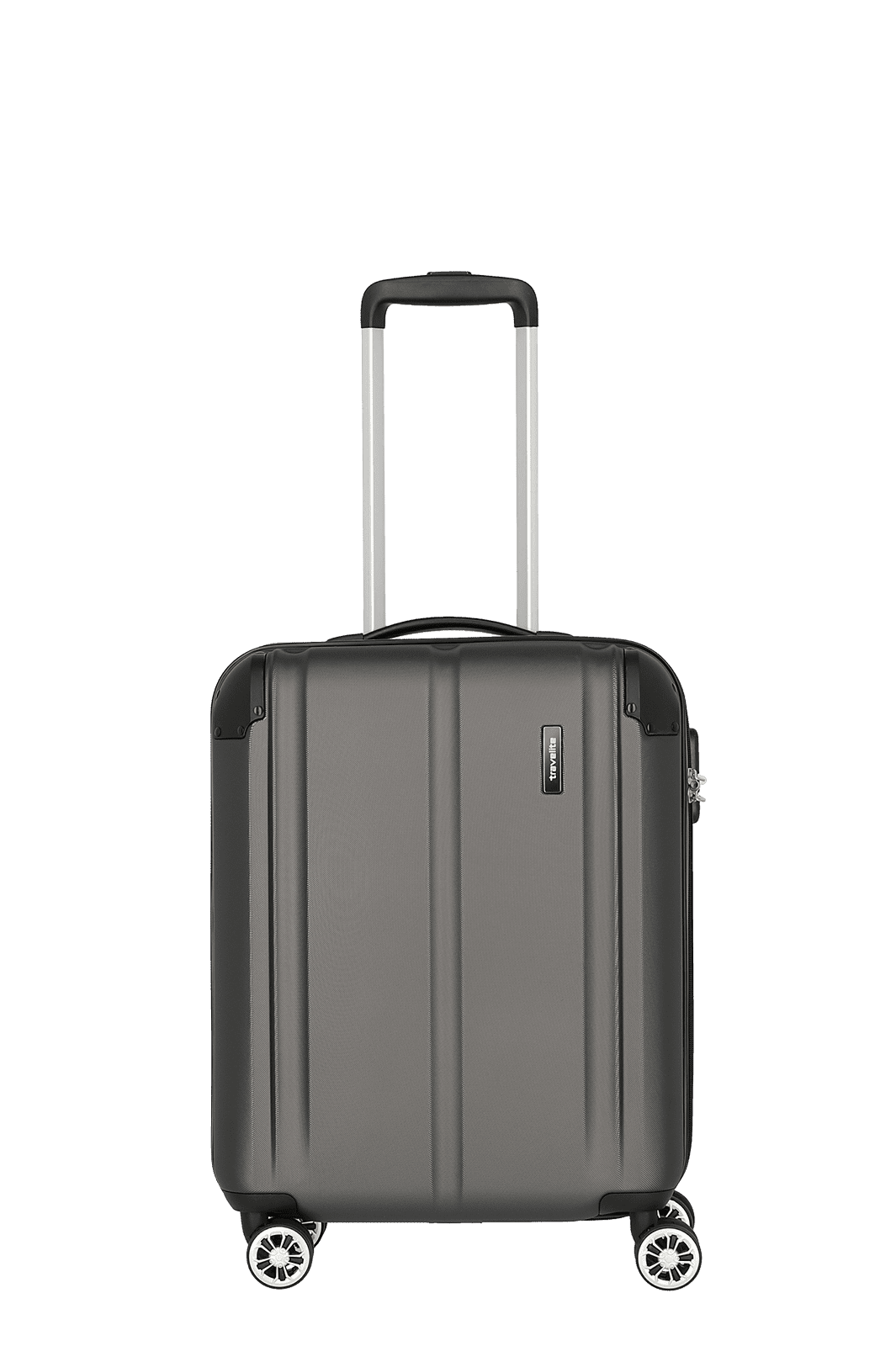
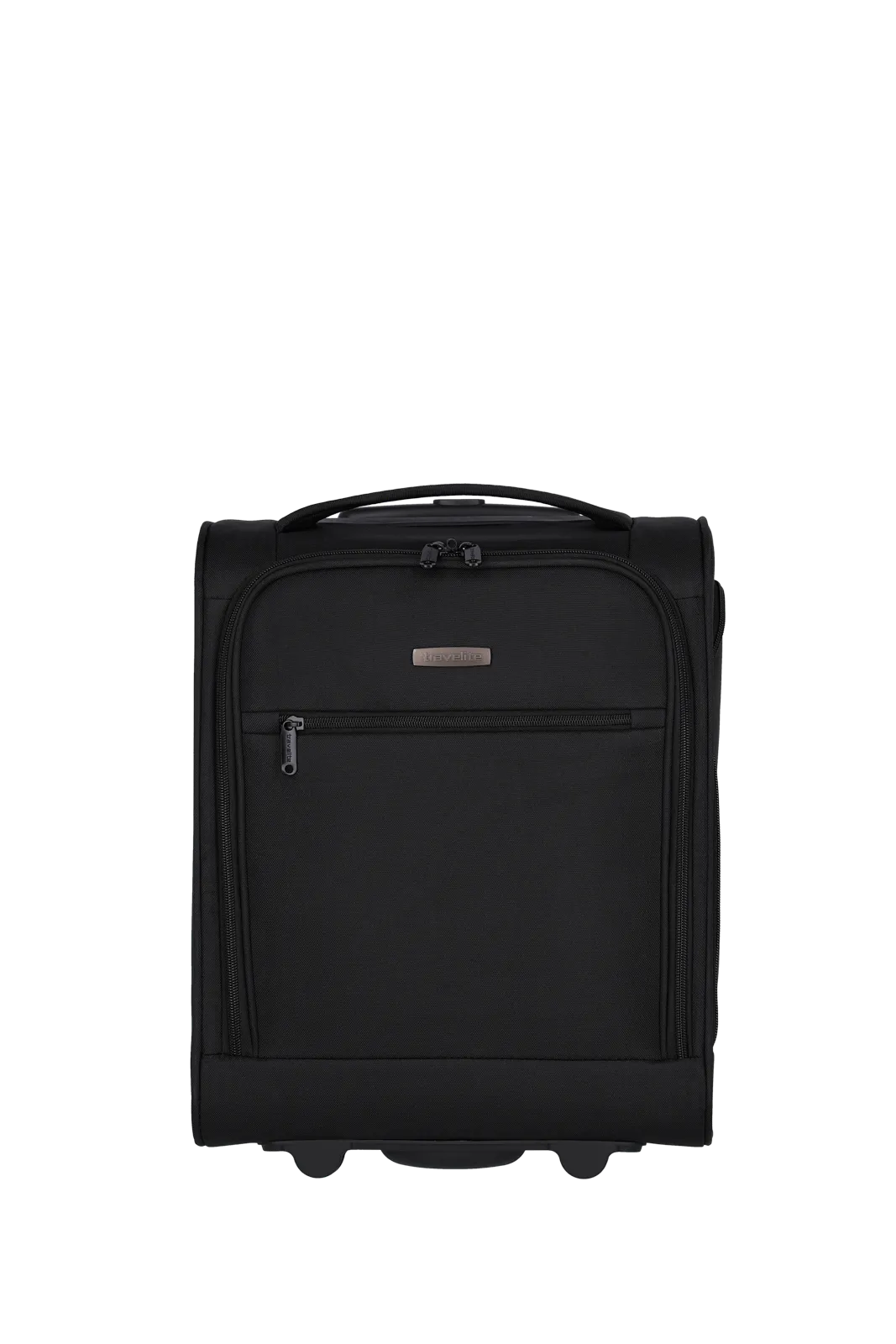
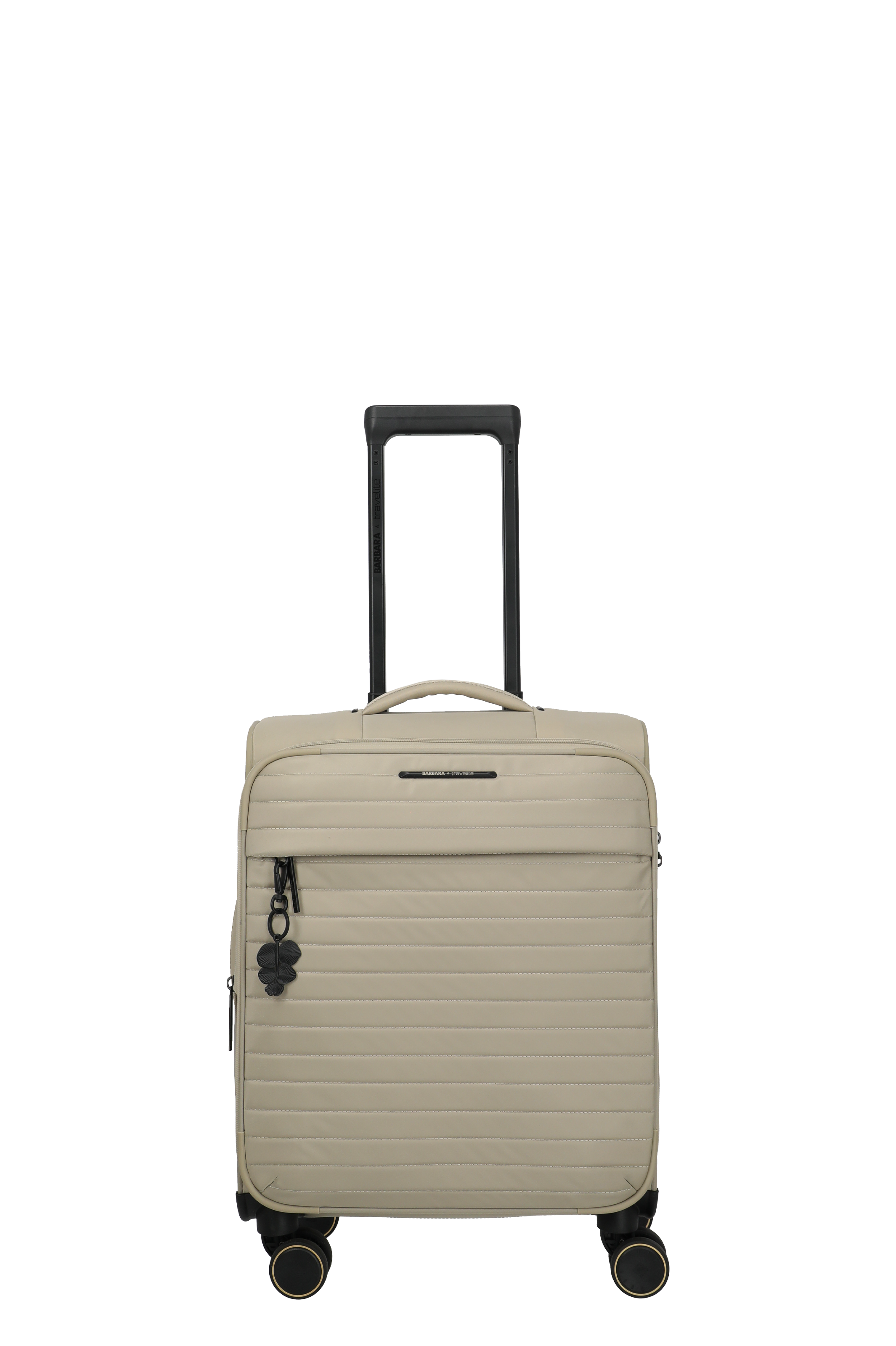
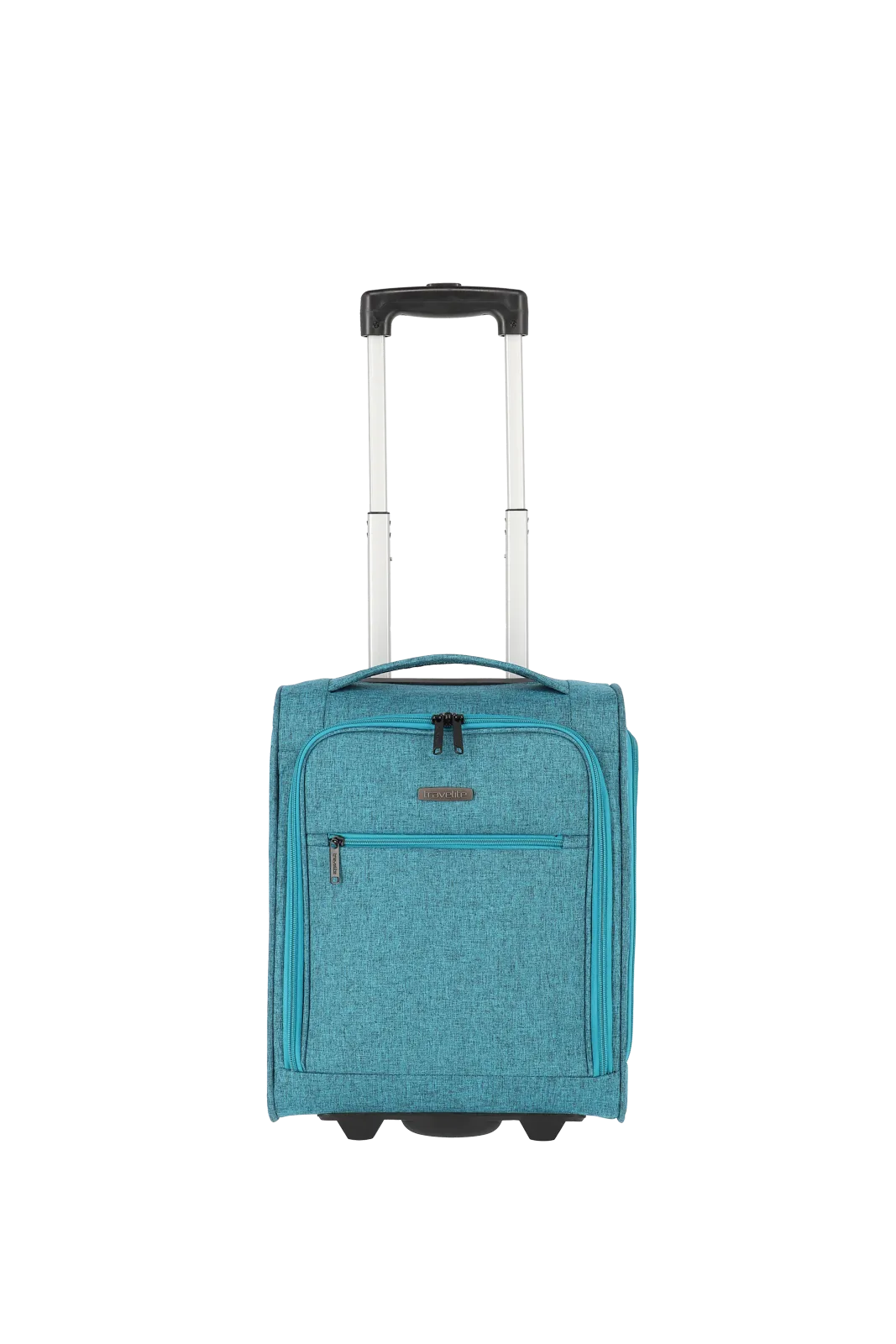
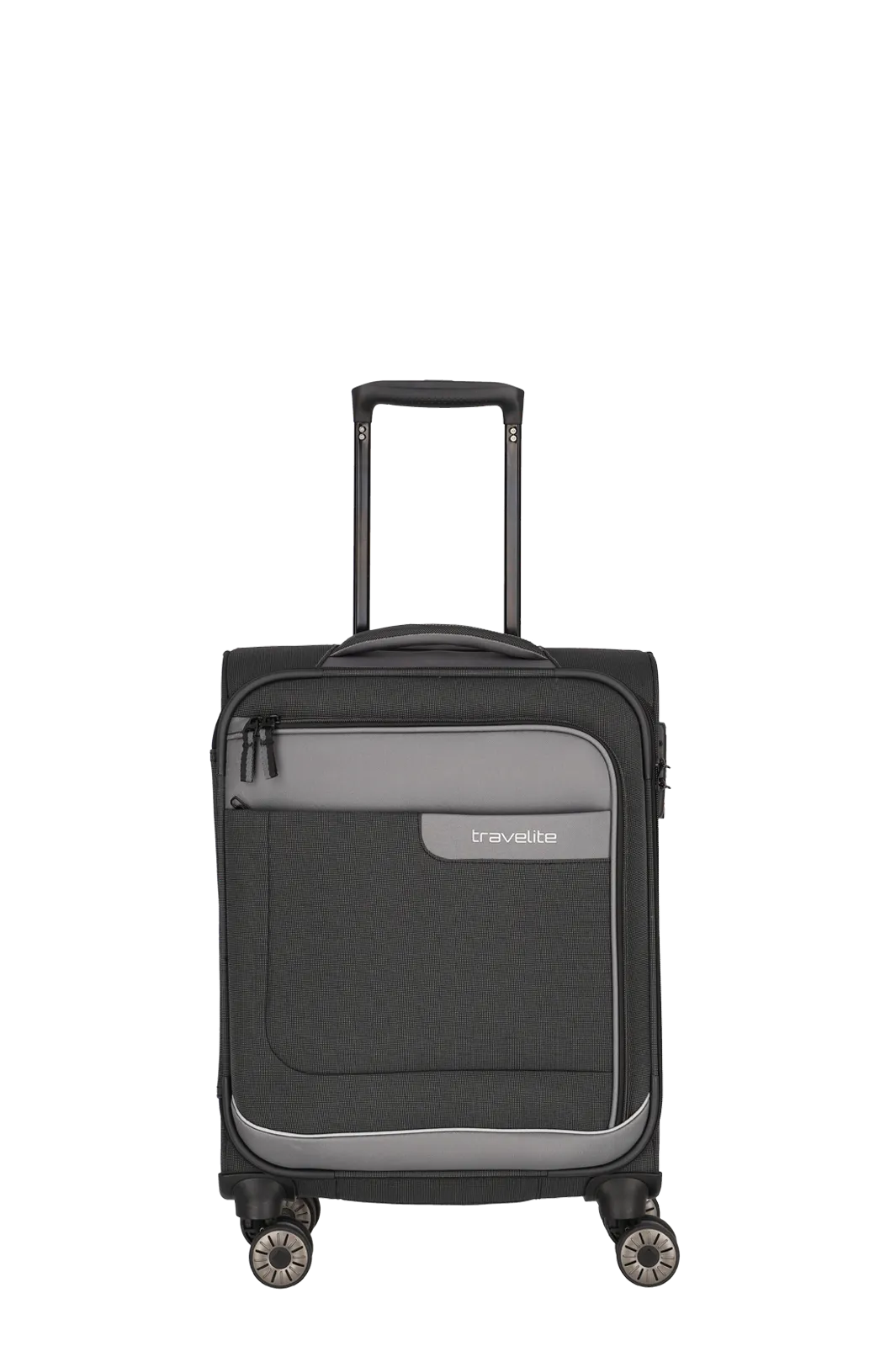
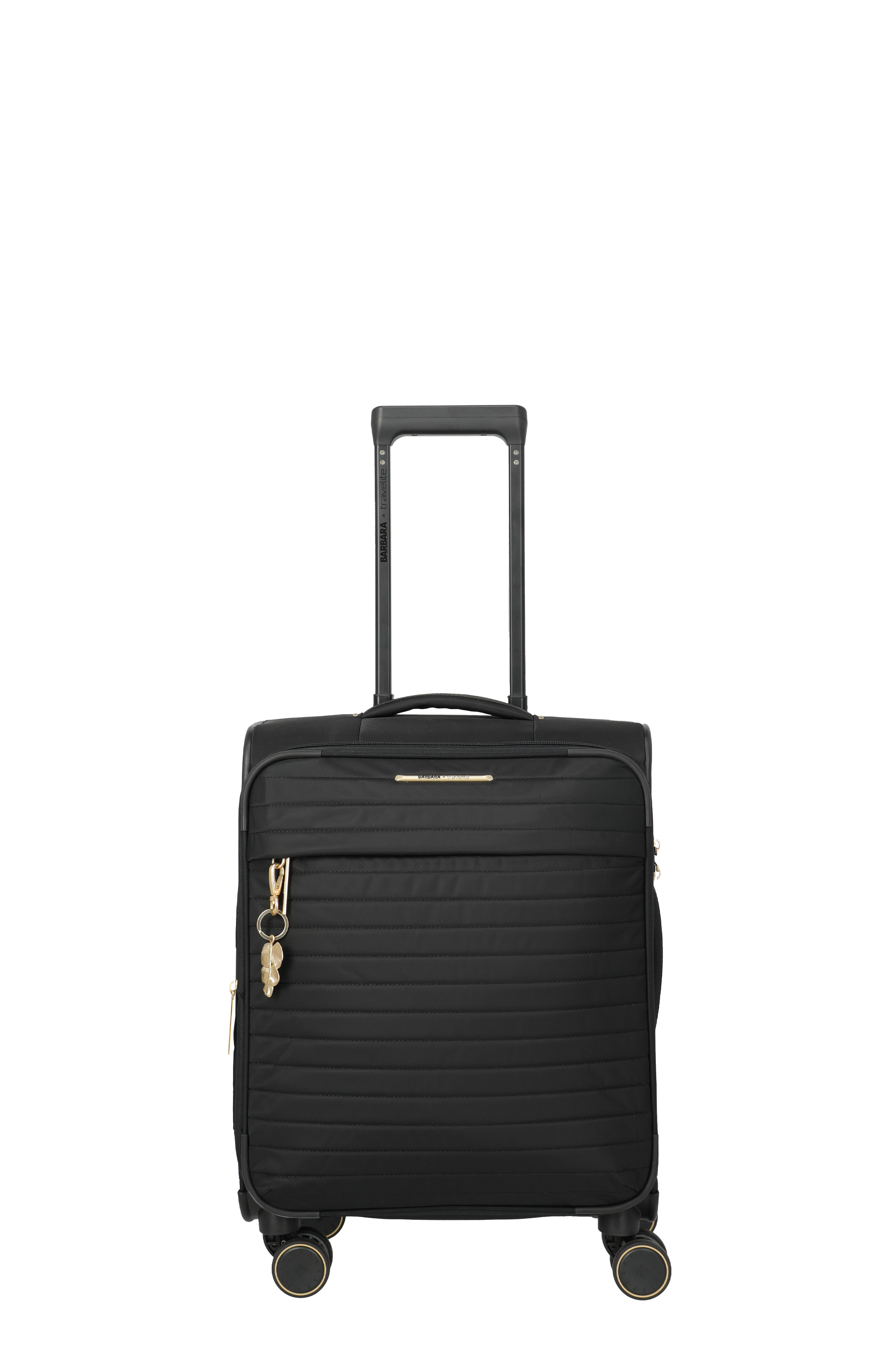
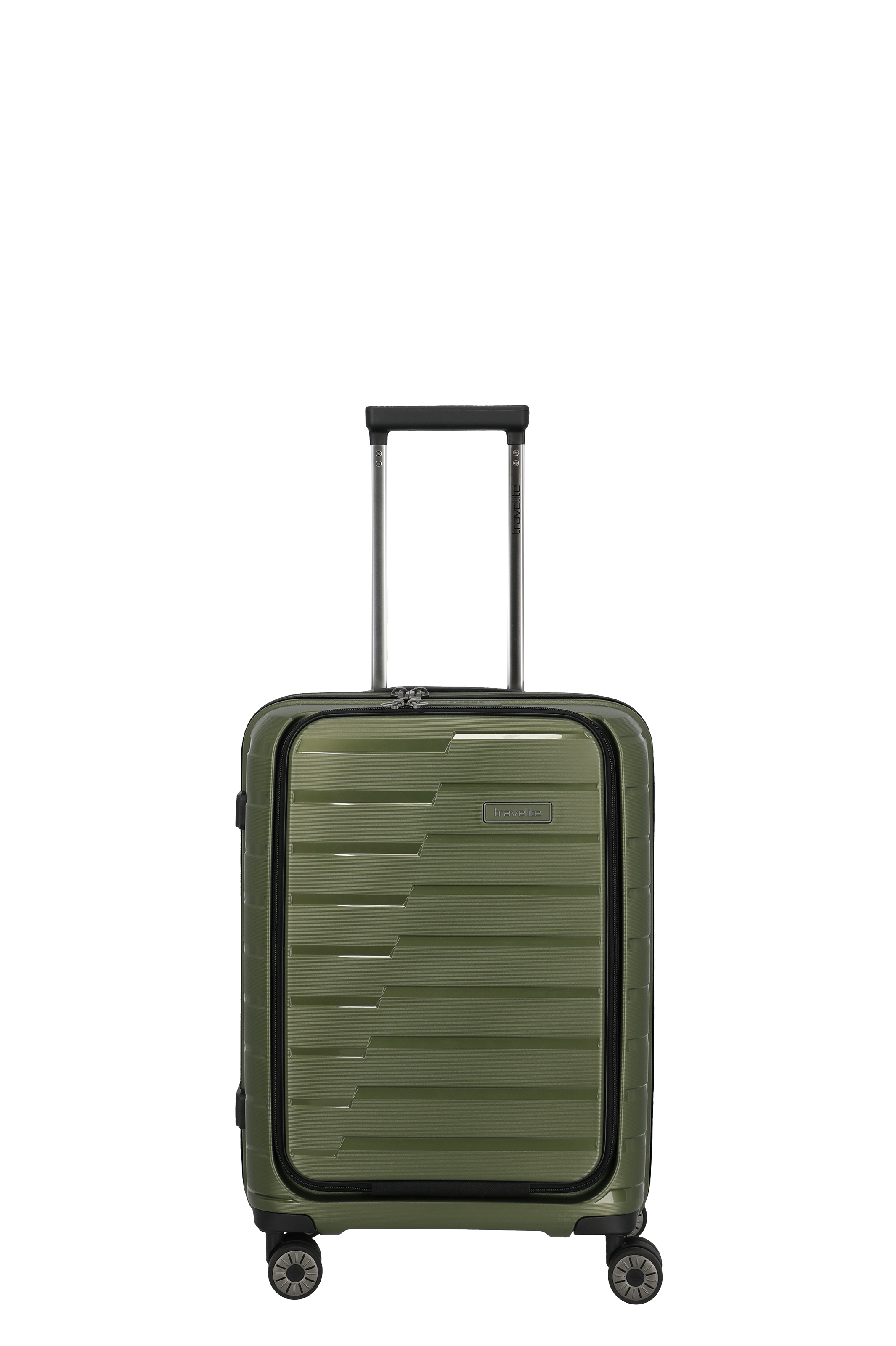
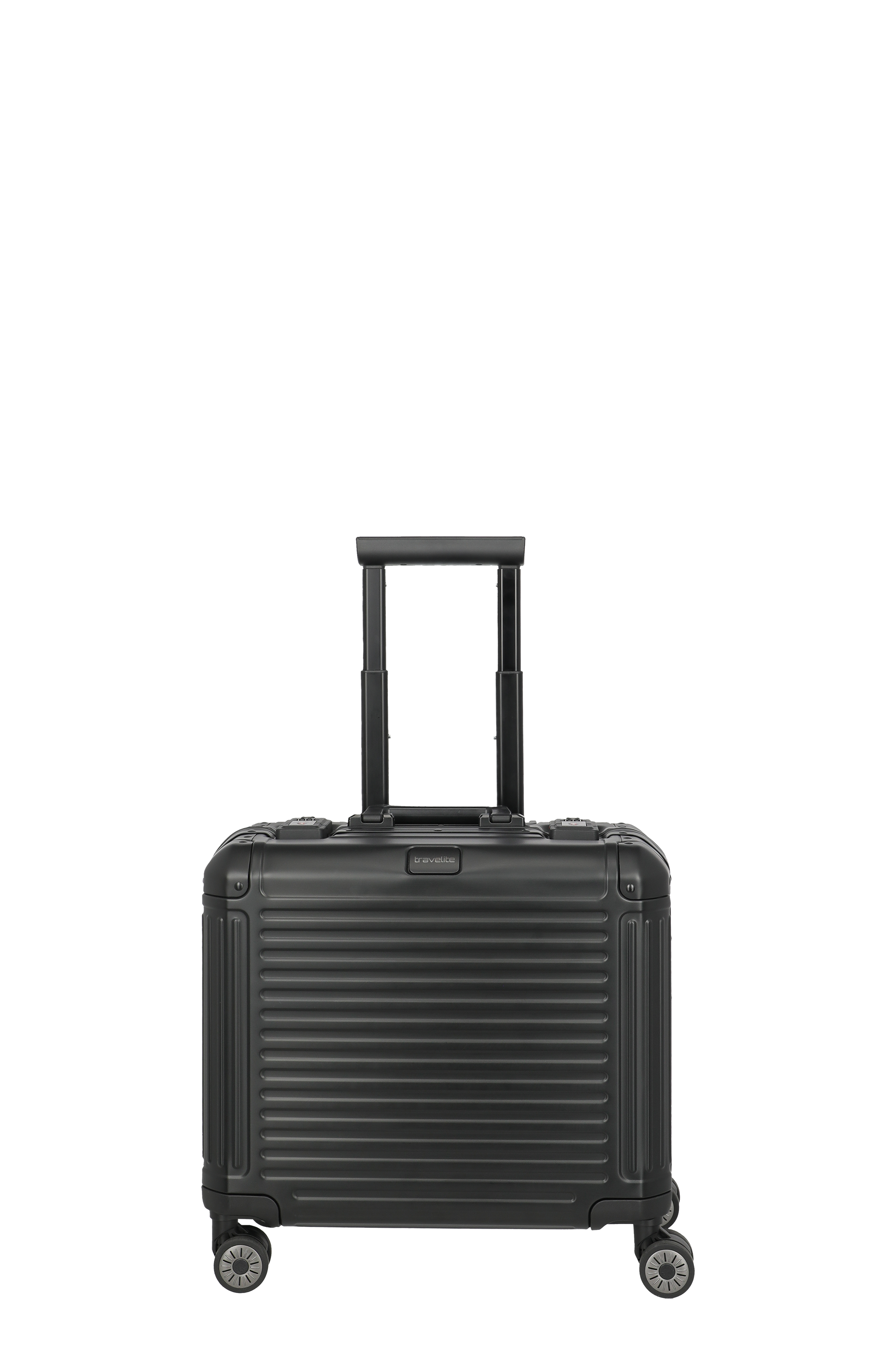
The type of luggage you use makes a big difference when packing. Trolleys with integrated packing straps keep the contents in place during transport, soft-sided suitcases are easier to squeeze into full luggage compartments, and travel backpacks for carry-on are ideal if you want to hit the ground running after landing. The travelite range offers the right models for every trip in standard carry-on sizes.
Packing your hand luggage properly – tips for travelling efficiently
Well-organised hand luggage not only saves space but also makes things easier at the airport. With the right technique for packing suitcases, you can fit a surprising amount into even small pieces of luggage without anything getting creased or becoming a jumble.
Tips for organising your hand luggage efficiently:
- Store heavy items at the bottom (to prevent anything from getting damaged)
- Keep important documents such as travel documents and medication to hand
- Place any items that may need to be shown to customs officers during security checks (e.g. liquids) at the top of the zip or in the front pocket
- Roll clothes up tightly instead of folding them (this saves space and prevents creases)
- Take advantage of a free additional piece of luggage (such as a handbag)
- Place small items in separate bags (e.g. jewellery)
The type of luggage you use makes a big difference when packing. Trolleys with integrated packing straps keep the contents in place during transport, soft-sided suitcases are easier to squeeze into full luggage compartments, and travel backpacks for carry-on are ideal if you want to get going straight away after landing. The travelite range offers the right models for every trip in standard carry-on sizes.



hand luggage




Checklist for your hand luggage
Whether you’re travelling with hand luggage only or checking in additional luggage, there are certain items that should always be in your hand luggage. That way, if your checked luggage gets lost or arrives late, you’ll at least be sorted for the time being.
- Important documents (passport, identity card, flight tickets, hotel booking)
- Means of payment (card, some cash in the local currency)
- Valuables (wallet, jewellery)
- Medicines for the journey and your stay
- A change of clothes
- Toiletries (in a 1-litre bag, max. 100 ml each)
- In-flight meals
- Technical equipment (laptop, camera, charging cable, power bank, headphones)
- Universal socket adapter
- Neck pillows for long-haul flights
Checklist for your hand luggage
Whether you’re travelling with hand luggage only or also checking in a bag, there are certain items that should always be in your hand luggage. That way, if your checked-in luggage gets lost or arrives late, you’ll at least be sorted for the time being.
- Important documents (passport, identity card, flight tickets, hotel booking)
- Means of payment (card, some cash in the local currency)
- Valuables (wallet, jewellery)
- Medicines for the journey and your stay
- A change of clothes
- Toiletries (in a 1-litre bag, max. 100 ml each)
- In-flight meals
- Technical equipment (laptop, camera, charging cable, power bank, headphones)
- Universal socket adapter
- Neck pillows for long-haul flights
Customs regulations for hand luggage
In addition to airline regulations, customs regulations also apply when travelling across international borders. These rules specify which items and goods are permitted in hand luggage and which must be declared or are prohibited. Their primary purpose is to protect against prohibited substances, animal or plant diseases, and to ensure compliance with tax regulations.
These goods are generally subject to customs regulations:
- Alcohol and tobacco products: In most countries, duty-free imports are only permitted up to certain quantities. Anything exceeding these limits must be declared and, where applicable, cleared through customs.
- Food and plants: The import of fresh produce, meat, dairy products, plants and seeds is often restricted or prohibited to prevent the introduction of pests and diseases.
- Valuables: Electronic devices, jewellery or large sums of money must be declared upon entry, depending on the destination country. This applies in particular if the value exceeds a specified exemption limit.
Before you set off, check the current import regulations for your destination country. This will help you avoid delays at customs and ensure that your hand luggage complies with all regulations.
EU reform: What’s changing for air travellers in 2027
In June 2026, following years of negotiations, EU Member States and the European Parliament agreed on a reform of European air passenger rights. For travellers, this brings specific changes – including to hand luggage. The new rules will apply to the ‘ Airlines ’ following a twelve-month implementation period, from summer 2027 at the earliest. Until then, the current provisions will remain in force unchanged.
- Hand luggage to become a mandatory part of the flight fare: From summer 2027, Airlines must include one piece of hand luggage as standard in the displayed flight price. This usually covers a small cabin bag and a handbag. Cheaper tickets without hand luggage will still be available to book, but must be clearly labelled as such. For travellers, this means greater price transparency when comparing flights.
- Musical instruments are permitted in the cabin: Musicians will be allowed to take their instruments into the cabin once the reform comes into force. Until now, this has depended on the individual Airline and its willingness to accommodate such requests.
- Compensation claims remain valid: Attempts by individual EU Member States to raise the compensation threshold for delays from three to four hours and to reduce the amounts have failed. The existing regulations remain fully in force: for delays of three hours or more, passengers are entitled to up to 600 euros in compensation, depending on the flight distance.
- Children sit next to their parents free of charge:Airlines will no longer be allowed to charge additional fees for children to sit next to their parents. The same applies to people with reduced mobility, who must be seated next to their companion at no extra cost.
- Typos in names will be corrected free of charge:Airlines will in future correct minor spelling mistakes in ticket names free of charge.
Exactly when the new rules will come into force depends on the progress of national implementation. Full implementation is not expected until summer 2027 at the earliest.
Travel in comfort with ‘ travelite ’
Well-organised hand luggage saves time, stress and often money too. With the right suitcases, rucksacks and bags from travelite, you’ll be perfectly equipped for any flight – lightweight, robust and thoughtfully designed down to the last detail.
Which piece of luggage you choose as hand luggage depends entirely on your travel habits.Hard-shell suitcases offer stability and reliable protection for fragile items.Travel bags are particularly versatile, lightweight and can be stowed away to save space. Soft-sided suitcases combine both advantages – they are durable, retain their shape and are lightweight at the same time.
Whether it’s a short break, a business trip or a long-haul flight – with travelite you’ll travel in comfort, with everything organised and perfectly prepared.
FAQ – Frequently asked questions about hand luggage
What are the size limits for hand luggage?
The standard dimensions for hand luggage are 55 x 40 x 20 cm, although individual Airlines may allow for slight variations. With Lufthansa, for example, 55 x 40 x 23 cm is permitted. It’s best to check your airline’s exact requirements before every flight.
How heavy can hand luggage be?
For most airlines, the permitted weight is between 8 and 10 kilograms. With low-cost airlines, the limit may be lower. Here, too, it’s worth checking the baggage policies before travelling.
What counts as a liquid in hand luggage?
In addition to water, beverages and cosmetics, creams, gels, pastes, sprays and toothpaste are also considered liquids. They may only be carried in containers of no more than 100 millilitres, all together in a transparent 1-litre bag.
How many liquids am I allowed to carry in my hand luggage?
The total quantity is limited to one bag per person. It must not exceed 1 litre in capacity and must be presented separately at the security check.
Are power banks allowed in hand luggage?
Yes, power banks may only be carried in hand luggage, not in checked-in luggage. The maximum capacity is usually between 100 and 160 Wh, depending on the Airline.
Can I take food in my hand luggage?
Solid foods such as sandwiches, fruit or snacks are permitted. Liquid or creamy foods, such as yoghurt or spreads, are, however, classified as liquids and must be placed in the 1-litre bag.
Can I take a bag with me in addition to my hand luggage?
Many Airlines allow a so-called ‘personal item’, such as a handbag, laptop bag or small rucksack. The exact dimensions and weight depend on the Airline and the fare class booked.
What happens if my carry-on luggage is too large or too heavy?
In this case, the item of luggage usually has to be checked in at the gate for a fee. The charges are often higher than for standard checked-in luggage, so it’s worth measuring and weighing it beforehand.
Customs regulations for hand luggage
In addition to airline regulations, customs regulations also apply when travelling across international borders. These rules specify which items and goods are permitted in hand luggage and which must be declared or are prohibited. Their primary purpose is to protect against prohibited substances, animal or plant diseases, and to ensure compliance with tax regulations.
These goods are generally subject to customs regulations:
- Alcohol and tobacco products: In most countries, duty-free imports are only permitted up to certain quantities. Anything exceeding these limits must be declared and, where applicable, cleared through customs.
- Food and plants: The import of fresh produce, meat, dairy products, plants and seeds is often restricted or prohibited to prevent the introduction of pests and diseases.
- Valuables: Electronic devices, jewellery or large sums of money must be declared upon entry, depending on the destination country. This applies in particular if the value exceeds a specified exemption limit.
Before you set off, check the current import regulations for your destination country. This will help you avoid delays at customs and ensure that your hand luggage complies with all regulations.
EU reform: What’s changing for air travellers in 2027
In June 2026, following years of negotiations, EU Member States and the European Parliament agreed on a reform of European air passenger rights. For travellers, this brings specific changes – including to hand luggage. The new rules will apply to the ‘ Airlines ’ following a twelve-month implementation period, from summer 2027 at the earliest. Until then, the current provisions will remain in force unchanged.
- Hand luggage to become a mandatory part of the flight fare: From summer 2027, Airlines must include one piece of hand luggage as standard in the displayed flight price. This usually comprises a small cabin bag and a handbag. Cheaper tickets without hand luggage will still be available to book, but must be clearly labelled as such. For travellers, this means greater price transparency when comparing flights.
- Musical instruments are permitted in the cabin: Musicians will be allowed to take their instruments into the cabin once the reform comes into force. Until now, this has depended on the individual Airline and its willingness to accommodate such requests.
- Compensation claims remain valid: Attempts by individual EU Member States to raise the compensation threshold for delays from three to four hours and to reduce the amounts have failed. The existing regulations remain fully in force: for delays of three hours or more, passengers are entitled to up to 600 euros in compensation, depending on the flight distance.
- Children sit next to their parents free of charge:Airlines will no longer be allowed to charge additional fees for children to sit next to their parents. The same applies to people with reduced mobility, who must be seated next to their companion at no extra cost.
- Typos in names will be corrected free of charge:Airlines will in future correct minor spelling mistakes in ticket names free of charge.
Exactly when the new rules will come into force depends on the progress of national implementation. Full implementation is not expected until summer 2027 at the earliest.
Travel in comfort with ‘ travelite ’
Well-organised hand luggage saves time, stress and often money too. With the right suitcases, rucksacks and bags from travelite, you’ll be perfectly equipped for any flight – lightweight, robust and thoughtfully designed down to the last detail.
Which piece of luggage you choose as hand luggage depends entirely on your travel habits.Hard-shell suitcases offer stability and reliable protection for fragile items.Travel bags are particularly versatile, lightweight and can be stowed away to save space. Soft-sided suitcases combine both advantages – they are durable, retain their shape and are lightweight at the same time.
Whether it’s a short break, a business trip or a long-haul flight – with travelite you’ll travel in comfort, with everything organised and perfectly prepared.
FAQ – Frequently asked questions about hand luggage
What are the size limits for hand luggage?
The standard dimensions for hand luggage are 55 x 40 x 20 cm, although individual Airlines may allow for slight variations. With Lufthansa, for example, 55 x 40 x 23 cm is permitted. It’s best to check your airline’s exact requirements before every flight.
How heavy can hand luggage be?
For most airlines, the permitted weight is between 8 and 10 kilograms. With low-cost airlines, the limit may be lower. Here, too, it’s worth checking the baggage policies before travelling.
What counts as a liquid in hand luggage?
As well as water, drinks and cosmetics, creams, gels, pastes, sprays and toothpaste are also classified as liquids. They may only be carried in containers of no more than 100 millilitres, all together in a transparent 1-litre bag.
How many liquids am I allowed to carry in my hand luggage?
The total quantity is limited to one bag per person. It must not exceed 1 litre in capacity and must be presented separately at the security check.
Are power banks allowed in hand luggage?
Yes, power banks may only be carried in hand luggage, not in checked-in luggage. The maximum capacity is usually between 100 and 160 Wh, depending on the Airline.
Can I take food in my hand luggage?
Solid foods such as sandwiches, fruit or snacks are permitted. Liquid or creamy foods, such as yoghurt or spreads, are, however, classified as liquids and must be placed in the 1-litre bag.
Can I take a bag with me in addition to my hand luggage?
Many Airlines allow a so-called ‘personal item’, such as a handbag, laptop bag or small rucksack. The exact dimensions and weight depend on the Airline and the fare class booked.
What happens if my carry-on luggage is too large or too heavy?
In this case, the item of luggage usually has to be checked in at the gate for a fee. The charges are often higher than for standard checked-in luggage, so it’s worth measuring and weighing it beforehand.