

Airport security check: how to master the security check without stress
You’re really looking forward to your trip, but the thought of the airport security check is giving you a knot in your stomach? Don’t worry, you’re not alone! Many travellers find airport security checks stressful and nerve-wracking. But it doesn’t have to be that way. With a few simple tips and tricks, you can get through security quickly and stress-free. We’ll show you how to prepare properly and what you need to bear in mind so that your journey can get off to a relaxed start.
Contents
Why is airport security screening so important?
Airport security screening is a crucial part of any air journey. But why is it actually so important? This is a question many travellers ask themselves as they go through security. The answer is simple: safety and security. The main purpose of security screening is to ensure the safety of all passengers, the cabin crew and the aircraft itself. Through strict checks of hand luggage and suitcases, dangerous items, such as weapons or explosive materials, are identified and removed from circulation. This prevents potential threats and protects against possible attacks.
Since the tragic events of 11 September 2001, security checks have also played a crucial role in the fight against terrorism. Security measures at airports worldwide have been significantly tightened, and the introduction of modern technologies and stricter regulations has helped to make flying safer today than ever before.
Furthermore, security checks help to ensure compliance with international regulations and standards. Cooperation between different countries and airports ensures that security protocols are similar and effective worldwide.
In short, airport security checks are essential to guarantee a safe and reliable flying experience. They not only protect against immediate dangers, but also help to maintain confidence in the safety of air travel. By undergoing these checks, we all play our part in making travel safer for ourselves and others.
Tips for preparing for airport security checks

Airport security checks can often be stressful and time-consuming, especially if you don’t know exactly what to expect. However, with a few simple preparations, you can make this process much easier. In this section, we’ll give you some valuable tips on how to prepare for security screening in the best possible way, so you can start your journey feeling relaxed and stress-free. From packing your liquids correctly to advice on what to wear – here you’ll find everything you need to know to get through security quickly and smoothly.
Keep your travel documents to hand
Always keep your passport, ticket and other necessary documents to hand. This speeds up the process and avoids unnecessary delays.
Packing liquids correctly
Make sure that all liquids are in containers of no more than 100 ml and that these are packed in a transparent, resealable bag. This rule complies with international security guidelines and makes security checks easier.
Store electronic devices correctly
Laptops, tablets and other large electronic devices must be screened separately. Pack them so that they are easily accessible and can be quickly removed from your carry-on luggage.
Comfortable clothing and shoes
Wear comfortable clothing and shoes that are easy to take off and put back on. Avoid metal accessories such as belts or jewellery to speed up the security check.
Hand luggage organised efficiently
Pack your carry-on luggage so that all items that need to be scanned, such as liquids and electronic devices, are kept in easily accessible places. Being well organised saves time and stress.
Arrive at the airport in good time
Allow plenty of time for security screening. It is recommended that you arrive at the airport at least two hours before your flight so that you can go through all the steps without any stress. Many airports now also offer the option of booking a time slot for check-in, such as Hamburg Airport with its ‘Slot & Fly’ service.
Medicines and medical devices
If you are carrying medication or medical devices, please have the relevant prescriptions or medical certificates to hand. This makes security checks easier and prevents misunderstandings.
Knowledge of security guidelines
Check in advance the specific security guidelines for the airport and the airline you are travelling with. These can vary slightly, and knowing these rules in advance helps to avoid any surprises.
Tip
You can find out more about the regulations for what you can pack in your suitcase in our hand luggage guide.
How does a security check at the airport work?
Security checks can certainly be a bit nerve-wracking, especially for first-time flyers. To make sure you know exactly what to expect, here’s a guide to what happens at a security check:
Joining the queue: At the start of the security check, you’ll join the queue leading to the security checkpoint. It’s important to stay calm and wait patiently until it’s your turn. There are often dedicated queues for frequent flyers, families with young children or passengers with special needs.
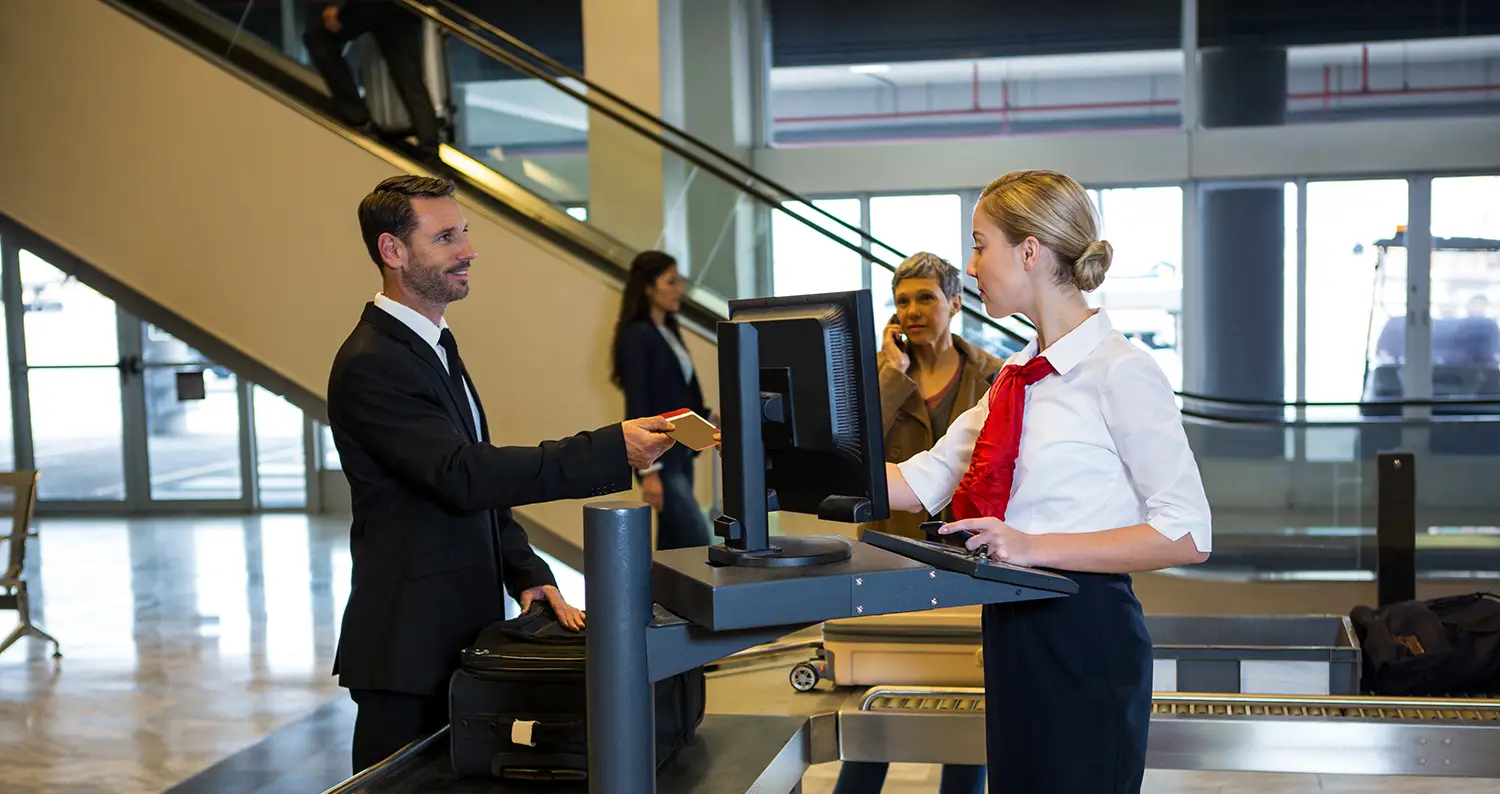
Presenting your travel documents: Before you go through the actual security check, you’ll be asked to present your boarding pass and your passport or identity card. A member of staff will check your documents and give you the go-ahead to proceed.
Preparing your carry-on luggage: Before you go through the security scanner, you must place your carry-on luggage on the conveyor belt. Make sure that all liquids are in containers of no more than 100 ml and are placed in a transparent, resealable bag. Remove electronic devices such as laptops and tablets from your bag and place them in separate trays. Make sure you do not have any prohibited items in your hand luggage.
Personal screening: Once you’ve placed your luggage on the conveyor belt, you’ll walk through the body scanner or metal detector. It’s important to remove all metal objects, such as coins, belts or jewellery, beforehand. Place these in small trays, which will also be scanned.
X-ray screening of hand luggage: Whilst you walk through the scanner, your hand luggage is X-rayed. Security staff check the images on the monitor to ensure that no prohibited items are present. Sometimes a piece of hand luggage is selected for a more detailed inspection, which may take a little longer.
Additional screening: If the body scanner or metal detector sets off an alarm, you’ll be asked to step aside. A security officer will then carry out a manual check, during which they’ll search you. This is done either by hand or with a handheld scanner.
Collecting your hand luggage: After security, you’ll collect your hand luggage and personal belongings. Make sure you haven’t left anything behind and check that all containers and bags are securely closed.
Completing security screening: Once you’ve repacked your belongings, you can leave the security area and proceed to your departure gate. Allow plenty of time to complete the entire process without stress.
By following these steps, you should be well prepared for the security check at the airport. You can find further tips for your first flight in our blog article – so that your first experience is as stress-free as possible. We wish you a pleasant flight!
Frequently asked questions about airport security checks
What is allowed through airport security?
Anything not on the list of prohibited items for hand luggage – such as clothing, books, electronic devices and liquids in containers of up to 100 ml. Pack all liquids together in a transparent, resealable bag with a maximum capacity of one litre. As airports and Airlines may have slightly different rules, it’s best to check the requirements at your departure airport before travelling.
What do you need to remove from your hand luggage at security?
As a rule, you should place laptops, tablets and other large electronic devices, as well as the bag containing liquids, into a separate tray. Belts, jewellery, coins and other metal objects must also be placed in a tray. If you pack these items within easy reach at the top of your carry-on luggage, the security check will go much more quickly.
What is absolutely not allowed in hand luggage?
Weapons, explosives and highly flammable substances as well as sharp or pointed objects are not allowed in your carry-on luggage. Security staff will also confiscate any liquids exceeding 100 ml per container, unless they are classified as medication or baby food. You can find the exact list at your airport or from the Federal Police.
How much time should you allow for security screening?
Allow at least two hours before your flight at the airport so that you can complete check-in and security without rushing. During holiday periods and at large airports, waiting times may be longer. Some airports also offer bookable time slots for security screening, which allow you to plan your waiting time more effectively.
What happens if the metal detector sets off an alarm?
If the body scanner or metal detector sets off an alarm, staff will ask you to step aside and carry out a manual secondary check. During this, a member of staff will pat you down or scan you with a handheld scanner. This is standard procedure and usually takes only a few minutes.
Are you allowed to take medication through security?
Yes, you are allowed to take medication that you need during the flight with you, even in liquid form and in larger quantities. Make sure you have a medical certificate or prescription to hand so that security checks go smoothly. The same applies to medical devices you need whilst travelling.












_400x400 Kopie.png?ts=1760433160)