

Travel tips for Indian Summer
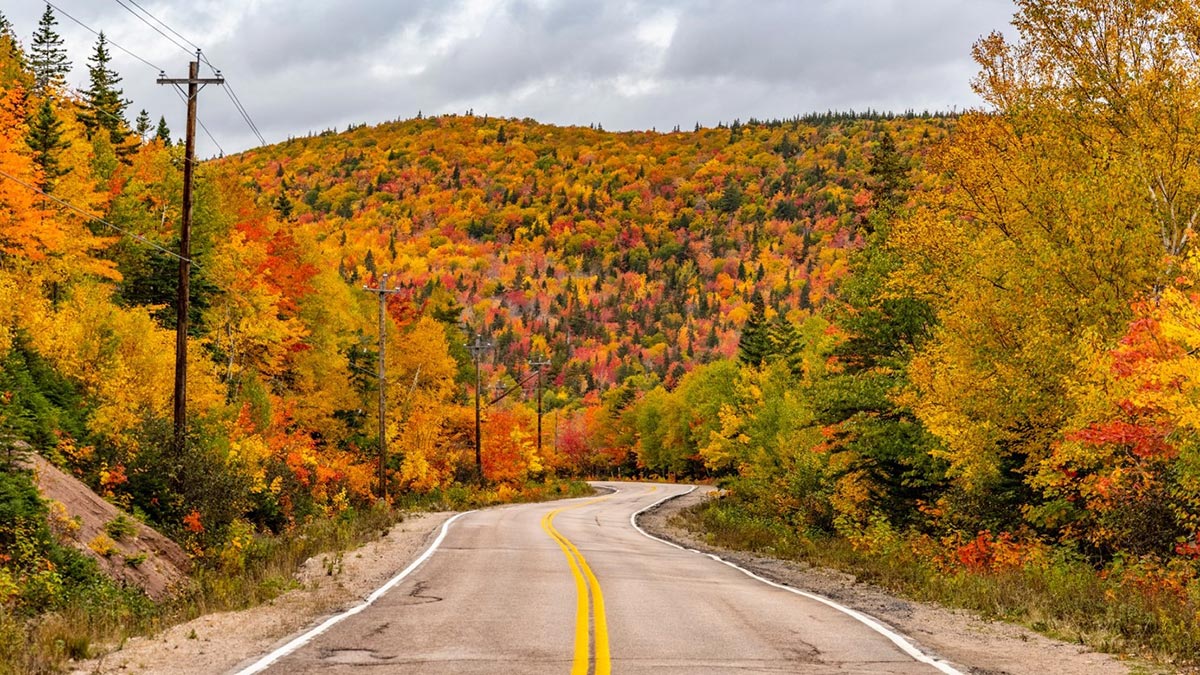
Green, yellow, orange, red. No other season shines with such intense colour as Indian Summer. Particularly in Canada and the USA, a unique natural spectacle unfolds, resembling a glimpse into a kaleidoscope. It invites you to go for walks through the woods, take road trips to lakes and explore valleys by bike.
We’ve picked out the most beautiful routes and destinations for a spectacular Indian Summer and will tell you when the right time is for you to set off.
Contents
Indian Summer – what exactly is it?
Indian Summer is not just a riot of colour, but also the time of year when this natural spectacle takes place in Canada and North America. It marks the change of seasons. It is summer in autumn. With pleasant temperatures and mild weather, and the interplay of cold nights and sunny days that makes the intense colouring of the leaves possible in the first place. In Germany, we tend to know Indian Summer as ‘golden autumn’ or ‘Altweibersommer’.
Indian Summer – the best time to visit
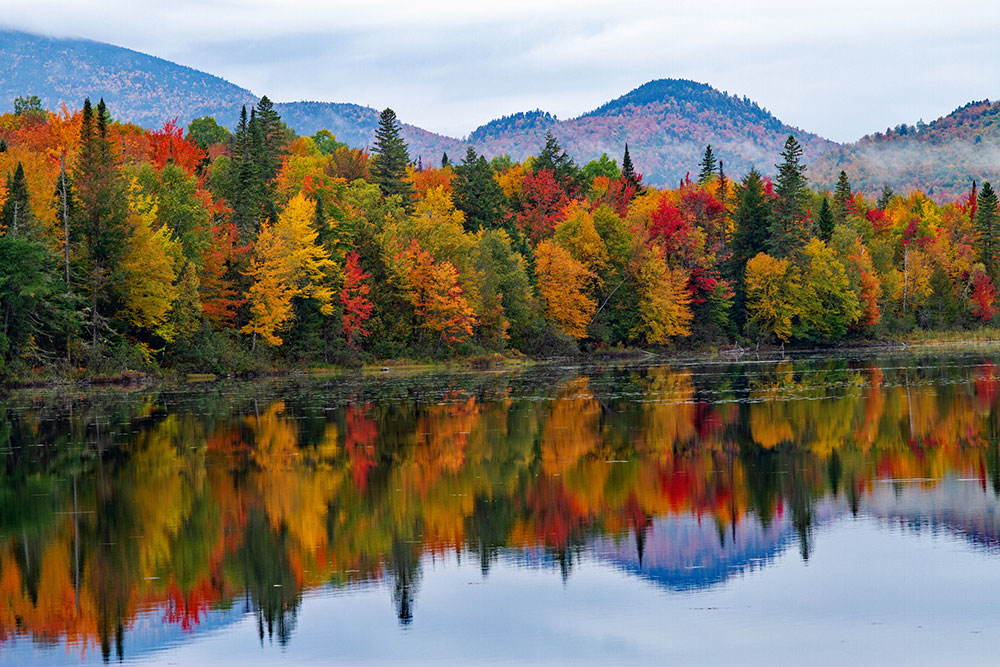
Exactly when the Indian Summer reaches its colourful peak depends entirely on the region. The further north we go in Canada, the earlier this natural phenomenon begins. On the mountain slopes here, the leaves start to change colour as early as the end of August. In the southern part of New England, such as in the state of Connecticut, it doesn’t arrive until the beginning of October and then often lasts for the whole month.
In addition to the region, the Indian Summer also depends on weather conditions. The timing can therefore vary from year to year. Generally speaking, however, the best time to travel and experience the golden autumn in Canada and North America is between mid-September and the end of October.
Tip: The Smoky Mountains map shows the progression of the autumn colours for the current year. This allows you to plan your trip more effectively to coincide with the peak colours.
Indian Summer – the most beautiful routes & destinations
Indian Summer stretches across vast landscapes of Canada and North America. These include the Mid-Atlantic states, the Ohio Valley, the Great Lakes region, the Great Plains, Mount Royal Park, Nova Scotia and New Brunswick.
However, the New England states and eastern Canada boast an even greater variety of deciduous trees, resulting in an even wider range of colours. This is why the east coast is arguably the most popular destination for Indian Summer holidays.
Here are the five most spectacular destinations:
#1 Nova Scotia
It is Canada’s second-smallest province by area, lies directly on the North Atlantic and is home to what is arguably one of the most beautiful coastal routes: Nova Scotia. Here, the Indian Summer usually begins as early as the end of September.
If you love nature and have always wanted to spend a holiday in a campervan amidst stunning scenery, you should head for the Cabot Trail. This 300 km-long scenic route winds its way through the Cape Breton Highlands National Park, offering incredible views of the river valley and the sea along the way, and takes you to the stunning Annapolis Valley.
Along the route, you’ll find seven campsites where you can spend the night surrounded by nature. These are located in Cheticamp, Corney Brook, Fishing Cove, Macintosh Brook, Big Intervale, Broad Cove and Ingonish Beach.
The must-dos: go hiking, go kayaking, spot moose and bald eagles if you’re lucky, take a dip in Wards Rock Pool on the Margaree River, and spend a few nights at Big Intervale Fishing Lodges run by Ruth and Hermann Schneeberger.
#2 Québec
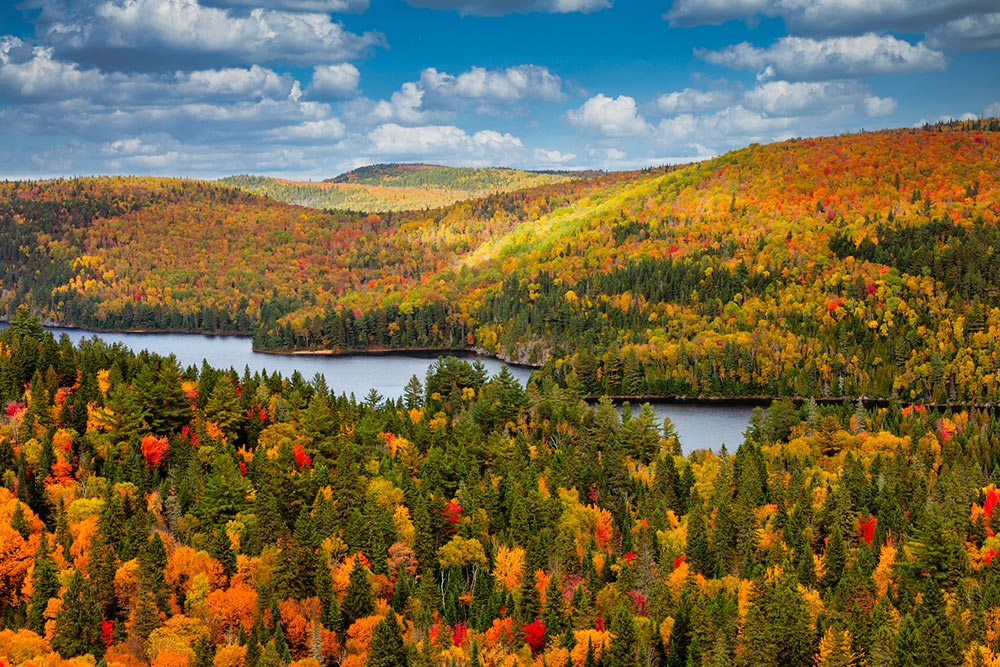
Those who prefer urban settings will feel particularly at home in Québec during Indian Summer. The city is known for its location on the Saint Lawrence River – but above all for its historic old town with its European flair and a city wall that has been a UNESCO World Heritage Site since 1985.
If you stroll through the narrow streets of the Petit-Champlain district, gain a wonderful insight into the city’s history on the Dufferin Terraces, stop to marvel at the Citadel, the Notre Dame Basilica and the Place Royale, and enjoy your evening meal at one of the restaurants on the Grande Allée, you’ll soon understand why we consider Québec to be one of the most beautiful places in the world.
Our tip on how to make the most of Indian Summer here: take this three-day mini-break to Québec and then head out to the Parc National de la Jacques-Cartier. With a canoe or kayak, you can paddle through the glacial valley and take in the full splendour of the forests’ colours from the water.
#3 Algonquin Provincial Park
There’s nature. And then there’s Algonquin Provincial Park. This impressive region, comprising around 2,400 lakes as well as deciduous and coniferous forests, was formed 11,000 years ago during the last Ice Age. Since then, a wide variety of wildflowers have found a home here across more than 7,700 square kilometres – even wild lilies and cardinal flowers bloom here in all their splendour.
To really get into the ‘nature adventure spirit’, we recommend staying overnight in a rustic wooden ranger’s cabin. From here, you can set off daily on your hiking, cycling or canoeing trips.
The shortest hiking route is the Hardwood Lookout Trail, which is less than a kilometre long and takes about 45 minutes to complete, offering a magnificent view over Smoke Lake. If you’re already an experienced hiker, you should try the eleven-kilometre Mizzy Lake Trail, where you’ll cross marshes via wooden boardwalks.
Our top tip: You can book canoe trips through Algonquin Adventure Tours. Since 1996, their guided tours and day trips have been regarded as the best in the region.
#4 Vermont
For many, the landscape in Vermont is the epitome of Indian Summer. This is because three-quarters of the state’s area is covered by forest – and not just any forest. Vermont boasts the highest density of maple trees, which are renowned for developing the most vibrant autumn colours.
The largest forested area – and a destination for many ‘leaf peepers’ – is the 1,500-square-kilometre ‘Green Mountain National Forest’. Here you can go hiking, play golf, go fishing and, of course, go mountain biking.
Our tip if you want to relax rather than drive along the popular ‘Route 100’: hop on the Green Mountain Railroad and let the Indian Summer landscape glide past you in a leisurely manner.
#5 Boston
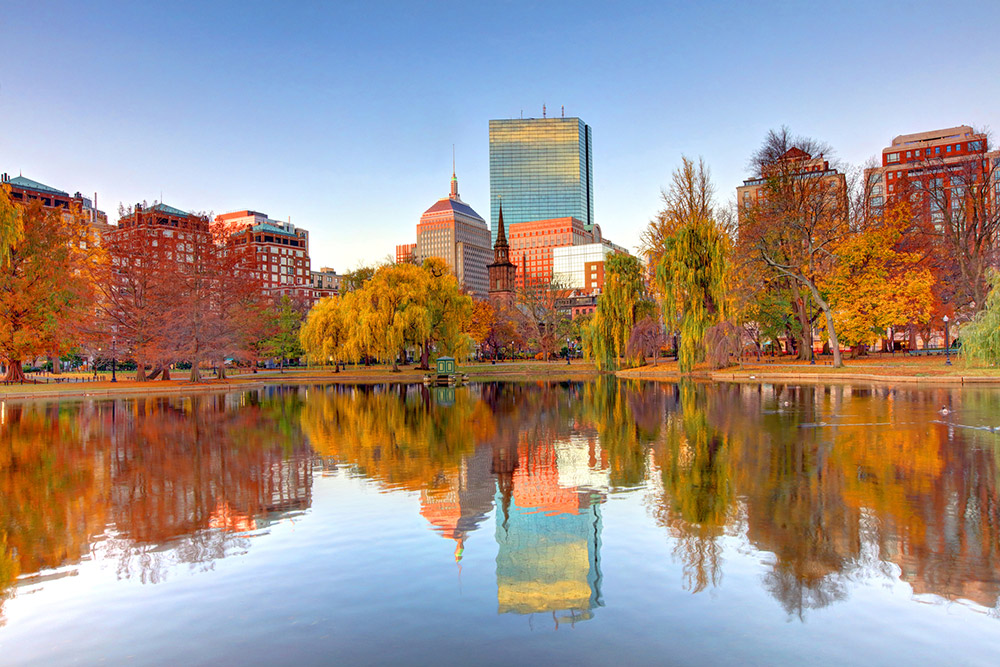
For our fifth tip, we’re heading back to the city – specifically, to Boston. New England’s largest city made history as early as 1773 with the ‘Boston Tea Party’. Founded in 1630, it is also one of the oldest cities in the USA. This is evident in the cityscape, which blends historic buildings with glass-clad skyscrapers.
Stroll across the impressive campus of Cambridge University, try the famous baked beans, experience American history on the Freedom Trail tour and pop into the ‘Cheers’ bar in the evening.
There are lovely parks in the city where you can enjoy the Indian Summer, but we suggest driving a little further west into Massachusetts to see even more of the changing colours. The autumn colours are said to be particularly beautiful in the Berkshire Mountains. Amidst rolling hills, small woodlands and charming villages, you’ll find pure relaxation.
Indian Summer – before you book
Fancy experiencing your own Indian Summer in Canada or North America right now? We can understand that. We feel exactly the same way. Before you book, however, do remember that you should always check the best time to travel for your chosen region once more.
It’s also worth thinking about useful travel essentials. Whether it’s mosquito bite relief or a foldable water bottle – on an Indian Summer holiday, it’s always a good idea to have some handy gadgets to hand.
FAQ on Indian Summer
What is an Indian Summer?
Indian Summer is the spectacular display of colours that occurs mainly in Canada and North America in autumn. It marks the change of season: pleasant temperatures, cold nights and sunny days cause the leaves to turn intense colours.
When is the best time to visit for the Indian Summer?
Generally speaking, the best time to visit is between mid-September and the end of October. The further north you go in Canada, the earlier the leaves begin to change colour, starting as early as the end of August on the mountain slopes. In Connecticut, in the south of New England, the colours don’t appear until early October.
Which destinations are particularly beautiful?
We present five destinations: Nova Scotia, Québec, Algonquin Provincial Park, Vermont and Boston. The east coast, comprising the New England states and eastern Canada, is particularly popular due to its variety of deciduous trees.
What is the Cabot Trail?
The Cabot Trail is a 300-kilometre-long scenic route in Nova Scotia. It runs through Cape Breton Highlands National Park and offers views of river valleys and the sea along the way. There are seven campsites along the route.
Why is Vermont a highlight for the Indian Summer?
Three-quarters of Vermont’s land area is covered by forest. The state has the highest density of maple trees, which are known for their vibrant autumn colours. The Green Mountain National Forest is a popular destination for many ‘leaf peepers’.


















_400x400 Kopie.png?ts=1760433160)